E‑Mobility in Hungary: The Next Growth Phase of E‑Mobility Is Driven by Digital Infrastructure

The next phase of e‑mobility growth will not be determined by vehicles, but by digital infrastructure. The NM Innovation Lab’s analysis focuses on identifying the key digital entry points that will shape this transformation.

The Next Growth Wave Will Be Defined by Digital Services

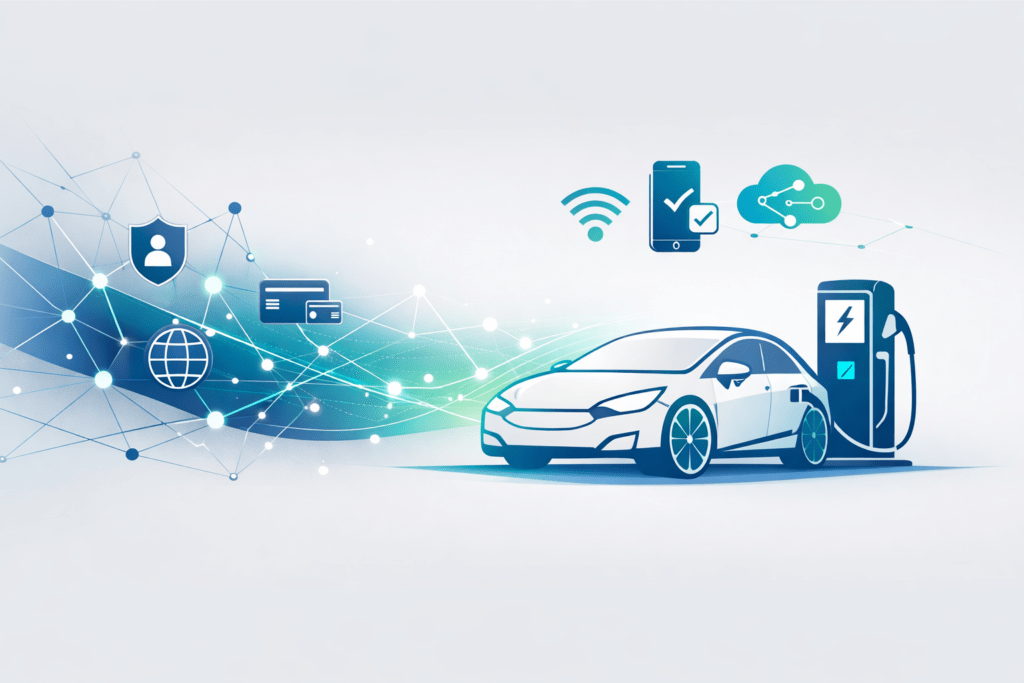
E‑mobility is not merely an automotive or energy‑sector issue. It represents a connected, digitally orchestrated ecosystem in which vehicles, charging infrastructure, energy systems, and user experience jointly shape the market.

The objective of the NM Innovation Lab’s analysis is to provide a comprehensive overview of the Hungarian landscape, key trends, and expected development trajectories—and to demonstrate why now is the right time to engage in the development of digital services related to e‑mobility.

Why Does the NM Zrt. Innovation Lab Focus on E‑Mobility?

NM Zrt. is neither a vehicle manufacturer nor an energy provider.
Our added value emerges precisely where e‑mobility becomes scalable: in digital access and transactional infrastructure.

Scaling e‑mobility requires:

  • user identification,
  • payment and settlement,
  • interoperability,
  • data‑driven operation and system integration.

Together, these elements form the foundational layer of a modern digital mobility ecosystem.

Key Findings of the Analysis

  • The market is growing, but it is still in the early stages of its scale‑up phase.
  • The number of fully electric vehicles (BEVs) in Hungary is increasing, with multiple‑fold growth expected by 2030.
  • The expansion of charging infrastructure is essential, but not sufficient on its own.
  • User experience and scalability are primarily determined by the digital layer.
  • A critical condition for widespread adoption is interoperability: simple, fast, contract‑free (ad‑hoc) usage and payment at all public charging points.

A “Digital Entry Window” Is Now Open

At this stage of e‑mobility development, it is being decided:

  • which platform models will prevail,
  • how interoperability will be implemented,
  • and what digital payment and customer relationship structures will emerge.

Before market volumes fully scale up, the digital infrastructure is still shapeable.
Later, standards, platforms, and roles will become significantly more fixed.

Where Do We See Innovation Opportunities?

Based on the analysis, the greatest potential lies in:

  • the development of payment and settlement models,
  • interoperability and roaming solutions,
  • identification and access‑rights management,
  • integration of mobility platforms (MaaS approach),
  • digital integration into sustainability value chains,
  • data‑driven energy management and new flexibility models (e.g. V2G directions).

Next Step: Professional Dialogue and Cooperation

Our objective is not to build parallel systems, but to support the digital enablement of Hungary’s e‑mobility ecosystem, in cooperation with market participants and governmental stakeholders.

This analysis serves as a foundation for professional dialogue.
We are open to preparing pilot projects, interoperable solutions, and ecosystem‑level collaborations.

Extracts from the analysis

SEND A MESSAGE

chevron-down linkedin facebook pinterest youtube rss twitter instagram facebook-blank rss-blank linkedin-blank pinterest youtube twitter instagram